How to calculate a monthly mortgage payment
A standard fixed-rate repayment calculation spreads the loan principal and interest over a set number of payments. The loan amount is the money borrowed, which can differ from the property price after a down payment. The term determines how many payments are scheduled.
In the example, a principal of 100,000 is repaid over 30 years at a nominal annual interest rate of 5%. For monthly payments, the periodic rate is 0.05 ÷ 12 and the number of payments is 30 × 12 = 360. The formula gives an unrounded payment of about 536.8216, displayed as 536.82 per month.
This illustration assumes a constant interest rate, regular monthly payments and full repayment over the term. Different mortgage structures or local interest conventions require their own assumptions.
Principal and interest versus the full monthly cost
The payment shown covers repayment of principal and interest. A household’s housing budget can also include property taxes, insurance, mortgage insurance, association charges and other fees.
The Consumer Financial Protection Bureau explains that the total monthly mortgage payment can include costs beyond principal and interest. Compare what a lender includes before comparing its figure with an illustration.
Amortization describes the gradual repayment of the balance. Under a standard amortizing fixed-rate schedule, the interest portion decreases as the outstanding principal falls, while more of the payment goes toward principal.
Compare scenarios using consistent assumptions
A larger amount borrowed raises the payment when the rate and term stay the same. A longer term generally lowers the scheduled monthly payment but increases total interest when the rate and loan amount are unchanged. A payment estimate alone does not show whether a mortgage is affordable.
For a zero-interest loan, principal divided by the number of payments gives the regular payment; the displayed interest-bearing formula needs this separate zero-rate case. Extra payments and changing rates also require an adjusted calculation.
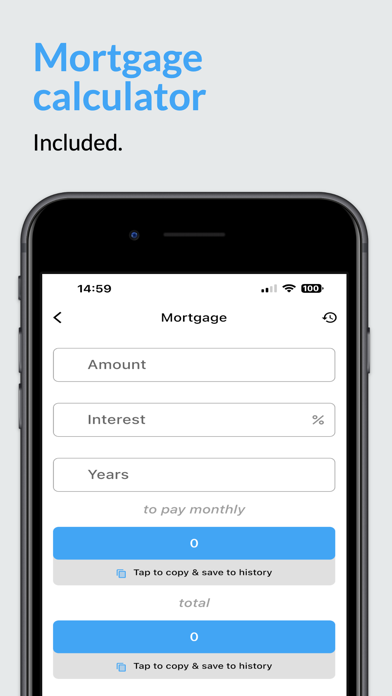
The app includes a Premium mortgage feature. Check its displayed inputs and assumptions before using a result. The fixed example on this page illustrates the payment formula. For other financial calculations, explore compound interest and interest rates.